
The short answer
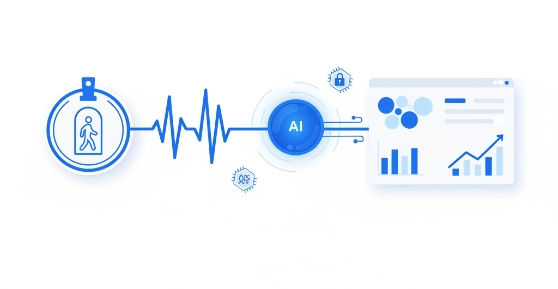
AI automated exit interviews use conversational AI — often a voice agent on a phone call — to schedule and conduct structured conversations with departing employees, ask follow-up questions, transcribe and analyse responses, and turn them into attrition themes HR teams can act on, while humans keep ownership of decisions.
Key definitions
- AI-powered exit interview
- A structured departure conversation conducted with a conversational AI agent under an HR-defined process.
- AI exit interview software
- Software used to conduct, document or analyse exit conversations; capabilities vary by product.
- Employee exit interview automation
- Automating repeatable outreach, questions, documentation and reporting within an exit workflow.
- AI employee feedback analysis
- Organising responses into suggested themes and patterns for people to inspect and act on.
What AI-powered exit interviews are and how they work
AI automated exit interviews extend a familiar HR process rather than removing HR from it. The precise workflow depends on the organisation's policies and the product's configuration.
Trigger the exit workflow
A resignation or approaching last working day prompts HR to offer an interview. Teams decide when outreach is appropriate and whether participation is voluntary.
Schedule and reach out
The employee is offered a suitable time for a call. A configured workflow may support rescheduling or reminders without requiring another manual scheduling exchange.
Ask structured questions
HR sets a consistent core question set about the employee's experience and reasons for leaving, with room for role- or location-specific topics.
Hold a voice conversation
A voice agent asks follow-ups when an answer such as “personal reasons” or “better opportunity” needs clarification. Employees should be able to pause, decline a question or request a person.
Transcribe and summarise
The conversation can become a transcript and a concise summary. HR should check important wording against the underlying response, particularly when speech recognition is uncertain.
Analyse themes
Configured analysis groups relevant feedback into suggested attrition themes. A theme is an interpretation, not proof of why someone left.
Review and act
HR reviews individual concerns and aggregate patterns, escalates sensitive reports under policy, and decides which changes warrant investigation.
Potential benefits of AI automated exit interviews
These are reasons to consider automation, not guaranteed outcomes. Compare any pilot with your current process and employee experience.
Less repetitive coordination for HR
Automated outreach, a configured question flow and draft summaries can reduce routine scheduling and note-taking. HR can spend more time on sensitive conversations and follow-through.
More consistent feedback collection
A shared core question set makes feedback easier to compare across exits. HR still needs flexibility: a fixed script should not prevent an employee from raising something unexpected.
Another route to participation
A phone conversation that needs no new app or form can help some employees take part. It will not suit everyone, so offer a human-led or accessible alternative.
Language choice
Hindi, English and other supported Indian languages may let frontline employees speak in a language they are comfortable using. Test actual dialects, accents and mixed-language answers before rollout.
Earlier visibility into feedback
Structured summaries can make recurring topics easier to review without waiting for manual consolidation. Speed is useful only when the source feedback remains available for verification.
How AI employee feedback analysis identifies attrition patterns
Analysis is most useful when it preserves what employees said and shows how a theme was assigned. HR should treat patterns as signals to investigate, not automatic diagnoses.
Theme tagging
Responses may be grouped under compensation, growth, manager relationships, workload or shifts, workplace conditions, policy and personal circumstances. One answer can contain several themes.
Sentiment in context
Tone or sentiment may help prioritise review, but a negative phrase is not necessarily a complaint about an employer. Read the surrounding answer before drawing conclusions.
Useful segmentation
With appropriate privacy safeguards, HR can compare aggregate themes by team, location, manager, tenure or role. Avoid reporting groups so small that individuals become identifiable.
Trends over time
Compare recurring topics across periods and against changes already made. For example, repeated mentions of overtime payment delays in stores in one region merit investigation, not an assumed cause.
Escalation of serious concerns
Mentions of harassment or safety should be flagged for a designated human response under policy. An IT services team's recurring growth or bench concerns likewise call for contextual review.
Traditional vs AI-powered exit interviews
Neither format is universally better. A trusted HR interviewer may be particularly valuable for a senior, complex or sensitive exit; automation can make a repeatable process easier to coordinate.
| Consideration | Traditional HR-led interview | AI-powered voice interview |
|---|---|---|
| Who conducts it | An HR colleague or trained interviewer. | A disclosed AI agent using HR-configured questions. |
| Scheduling | Arranged around interviewer and employee availability. | Outreach and suitable call times may be coordinated through a configured workflow. |
| Question consistency | A guide helps, though wording and coverage may vary. | A common core set can be asked consistently. |
| Follow-up depth | A person can pursue nuance, trust and unexpected issues. | Can ask configured clarifications; unusual or sensitive issues need human review. |
| Language | Depends on available interviewers. | Depends on supported and tested languages. |
| Scale | Requires interviewer time for each conversation. | Repeatable calls can reduce coordination, subject to workflow capacity. |
| Data format | Notes and records depend on interviewer practice. | May provide transcripts, summaries and structured themes. |
| Analysis speed | Usually requires manual consolidation. | Suggested themes may be available sooner, but require checking. |
| Confidentiality perception | Trust depends on the person, setting and stated access. | Perception varies; disclosure and clear data-access rules matter. |
| Human judgement | Present throughout the interview and follow-up. | Essential for interpretation, escalation and decisions afterward. |
Explore a voice-led exit conversation
See how structured conversations can make employee feedback available for thoughtful HR review.
Where automated exit interview solutions may fit
Start with the exit journeys and employee groups you already understand. Keep a human route available wherever an automated conversation is unsuitable.
Enterprises
A common question framework can help teams compare feedback across locations while allowing each business unit to add relevant context.
BFSI
Branch and frontline sales exits may surface location, targets, support and career-path concerns. Review results alongside local conditions rather than generalising across branches.
BFSI hiring guideIT companies
Conversations can explore growth, managers and project allocation. Keep human-led interviews available for senior or critical roles and complex circumstances.
Manufacturing
Suitable call times and supported regional languages may help reach shift workers and contract staff. Employment arrangements and privacy expectations still need careful handling.
Manufacturing workforce guideRetail
Store teams can collect comparable feedback on shifts, supervision and workplace conditions across locations without assuming every store has the same challenges.
Retail hiring guideHigh-attrition operations
BPO, logistics and field sales teams may need a practical way to gather repeatable feedback. Review themes by context and avoid treating a high response count as a substitute for action.
Logistics workforce guideImportant considerations before using AI exit interview software
Departing employees may share sensitive information. Design the process around their choices and the organisation's responsibilities before collecting it.
Privacy and consent
Explain the purpose, whether a call is recorded, what data is collected and how long it is kept. Assess applicable notice, consent and retention duties under India's Digital Personal Data Protection Act, 2023 with qualified legal counsel.
Confidentiality in practice
Disclose the AI interviewer and explain who can see individual answers. Prefer aggregate reporting where appropriate, limit access to raw transcripts and never promise anonymity that the process cannot provide.
Security and retention
Ask vendors about access controls, encryption, deletion, retention settings and incident handling. Confirm how these controls fit your organisation's policies before deployment.
Reviewable analysis
Check theme tagging for errors and unfair patterns across groups or languages. A framework such as the NIST AI Risk Management Framework can help structure evaluation; sentiment alone should not determine action.
Human oversight
HR must review findings, handle sensitive disclosures and give employees a way to speak to a person. Define an escalation owner before inviting conversations.
How to implement AI automated exit interviews and measure results
A small, reviewable pilot is more informative than switching every exit at once. Agree on the baseline and escalation process before the first invitation.
Define the objective
Decide whether the priority is participation, timely feedback, comparable themes or less administrative work.
Design questions
Use established exit-interview guidance, including SHRM resources, to keep questions relevant and open-ended; remove anything the organisation cannot responsibly act on.
Choose languages and access routes
Test the languages employees actually use and offer another format or a person when needed.
Pilot one function or location
Review transcripts, summaries and employee feedback from a limited rollout before expanding.
Communicate clearly
Tell employees what the AI does, whether participation is optional and how their information will be used.
Set escalation rules
Name the people responsible for urgent safety, harassment and other sensitive reports.
Connect and review
Ask the vendor how the process fits your existing exit workflow. Revisit questions, permissions and themes with HR after the pilot.
Measures to review against your baseline
- Completion and participation rate compared with the existing process.
- Share of specific, actionable reasons rather than generic responses.
- Time between an exit and a reviewed insight.
- HR hours spent coordinating, documenting and analysing interviews.
- Actions taken in response to recurring themes.
- Later regrettable-attrition trends in teams where changes were made.
Where Mishuk Labs fits
Mishuk Labs is a conversational AI platform for voice-based conversations. Where configured for exit interviews, its AI voice agents can call departing employees, hold multilingual conversations, ask follow-up questions, handle interruptions and pauses, and turn responses into transcripts and structured attrition themes for HR review.
HR teams decide the questions, review the evidence and choose what to do with the feedback. An automated conversation complements, rather than replaces, a direct discussion when an employee wants one or a sensitive situation calls for it.
Explore AI exit interviewsWhy exit interviews fail in IndiaConclusion
AI-powered exit interviews can make outreach and feedback review more consistent, but the value comes from listening carefully and acting responsibly. Start with clear questions, employee choice, privacy controls and a human escalation path. Measure whether the process produces useful, reviewable insights—not merely more interview records.